
Lab Notes: The Employee Loyalty Equation
July 2026 Essential Leadership Lab Cohort
In the nonprofit sector, we sometimes talk about “the mission” as our greatest retention tool. And yes, meaningful work is a differentiator for us as employers. But the data, and our own experience, tells a different story.
According to the 2025 Social Impact Staff Retention Report, 7 in 10 nonprofit employees are looking for a new job or will be within the next year. Our sector’s turnover rate currently sits at 19%, which is 50% higher than other industries. When you factor in that replacing a single employee costs an estimated six to nine months of their salary, retention isn’t an HR issue, it’s a mission continuity concern.
In our July Leadership Lab, we looked at the actual math of loyalty, exploring why salary increases – for better or worse – are not the primary retention solution, and identified five drivers that actually determine whether your best people stay or go.
To understand loyalty, we looked at Frederick Herzberg’s Two-Factor Theory. Herzberg argued that workplace satisfaction and dissatisfaction aren’t two ends of the same scale. They are driven by completely different conditions.
●Hygiene Factors: These include salary, benefits, job security, and organizational policies. If these are broken, people will leave. However, fixing them doesn’t actually motivate people to stay; it simply removes a reason for them to go.
●Motivators: These are the factors that drive genuine loyalty: meaningful work, recognition, growth, and responsibility.
The trap many leaders fall into is over-indexing on the hygiene category. We give a raise and expect long-term loyalty in return. Neuroscience, however, doesn’t support this. It turned out that humans are incredibly good at adapting to change, both positive and negative, so that emotional spikes and craters fairly quickly return to a relatively neutral position. Research shows the happiness boost from a raise typically returns to baseline within three to six months. In other words, a raise buys you time. It does not buy you loyalty. Fair, competitive salary bands are critical, but they’re also table stakes. Their ability to motivate someone to stay (versus giving them a reason to go) is limited. Investment in Motivators like recognition and growth are shown to have the greater payoff in retention and, in the kind of math that all of us like, are far easier to accommodate in the annual budget.
Insights from the Field
We asked our Lab members to audit their organizations against five key drivers of engagement. Two areas emerged as the most consistent challenges across our cohorts:
Growth Visibility: If an employee can’t see a future for themselves in your organization three years from now, they will start looking for an organization that can show them one. This is especially acute in smaller organizations where title progression is limited.
Genuine Recognition: Specific, timely, and meaningful acknowledgment signals that you see and value someone’s unique contribution. It can cost almost nothing except time and intention.
Participants shared their success stories, like a dedicated mentorship structure for entry-level roles and peer recognition programs. We also acknowledged the nuanced challenge of growth in small organizations, and the importance of balancing high-performing entrepreneurial staff with the reliable, operationally-focused team members who provide the backbone of our work.
Our cohorts also raised the very real financial pressures facing nonprofit employees today: the high cost of living, limited upward mobility, and the weight of family responsibilities that make financial stability feel increasingly out of reach for many in our sector. These are systemic challenges that no single organization can solve alone. They underscore why the non-financial drivers of loyalty matter so much: when you can’t always compete on compensation, the quality of the work environment, the relationships, and the growth opportunities become even more critical.
A Word on Healthy Turnover
One important clarification surfaced in our discussions: not every departure is a failure. Complete retention isn’t the goal. Some turnover creates space for new ideas, new talent, and new energy. The question isn’t how to keep everyone, it’s how to keep the right people, for the right reasons, for as long as it serves both the organization and the individual.
Some employees will outgrow what your organization can offer them. Some will reach the ceiling of what’s possible in a role or a budget. Some will be ready for a next chapter that you simply can’t provide. These types of departures can be a reflection of your mentorship, not a failure of your leadership. Sending someone into the sector better than you found them is part of the work.
Finally, loyalty has to be reciprocal. Leaders who want committed, engaged employees have to be willing to invest in those employees’ growth, wellbeing, and futures, even when that investment eventually walks out the door and into a bigger role somewhere else. The organizations that understand this build reputations as places where people grow, and that reputation is itself a retention tool.
About The Essential Leadership Lab
The Essential Leadership Lab is a cohort-based program for nonprofit leaders, providing practical frameworks and peer learning opportunities to address the real challenges facing the sector. Each month, we tackle topics that matter most to leaders navigating complexity and change.
Interested in joining a future Lab cohort? Enrollment opens in October. You can find more information here.
Lab Notes is a monthly series that turns the high-level discussions of TNPA’s Essential Leadership Lab into actionable insights for the nonprofit sector.

Author: Shannon McCracken
Shannon McCracken is the founding President and CEO at The Nonprofit Alliance.
Related Posts
Building Leadership Clarity at TNPA’s Leadership Summit 2026
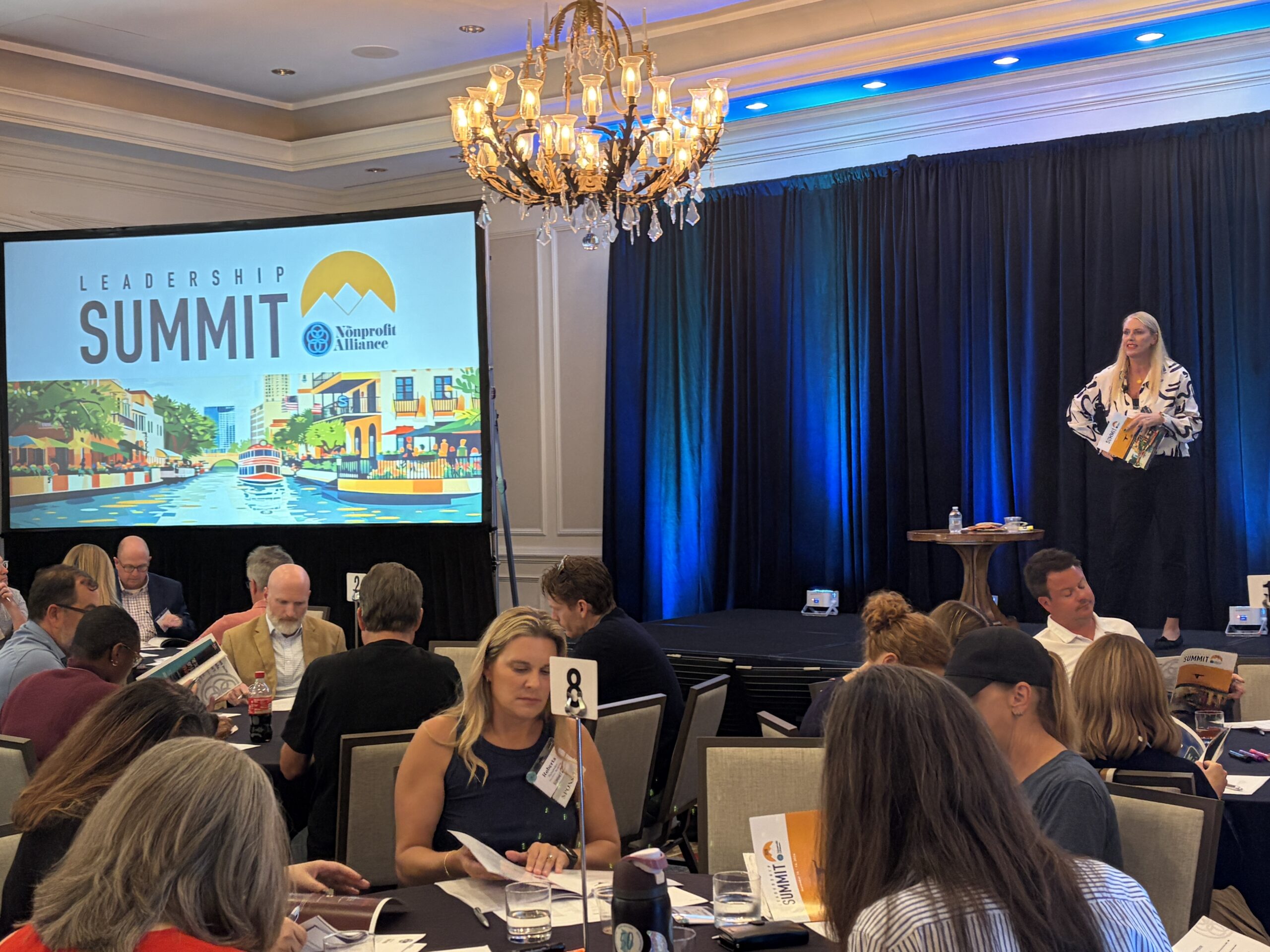
The team at The Nonprofit Alliance (TNPA) is thrilled to be in San Antonio, Texas, this week with more than 170 senior leaders from across the nonprofit sector. Against the backdrop of the beautiful Riverwalk, TNPA’s Leadership Summit 2026 has brought together a remarkable group of changemakers for an intensive, action-oriented experience designed to strengthen leaders, their teams, and the broader sector.
Leading EDGE Updates | August 2026
Check out our latest TNPA blog post for quarterly updates, including ways to get involved with our community of nonprofits, nonprofit-supporting companies, schools, and students who are passionate about making a difference through the social good sector!

Artificial Intelligence (AI) Policy Update
TNPA continues to work with policymakers regarding ethical AI priorities and we are closely tracking the implementation of the President’s AI plans.
We are also engaging our membership on educational opportunities as they navigate this fluid landscape, speaking with our nonprofit and commercial members regarding policy priorities which include…