
The Middle Manager Crisis Threatening Most Organizations′ Stability
If your organization is grappling with how to better support and equip middle managers during these times of disruption, now is the time to register for Management Essentials, a virtual training presented by TNPA and CSR Communications. Enroll here.
Today’s middle managers face pressure from multiple directions.
They feel responsible to senior leaders while lacking the authority to make critical decisions. They’re tasked with implementing change initiatives they had no voice in developing. They must support direct reports through uncertainty while managing their own anxiety.
In general, they operate with less control and a narrower perspective than executives, but with similar expectations to deliver results.
The Middle Manager’s Impossible Position
At my company’s recent Next Big Thing Executive Forum, leaders from across sectors gathered to discuss what feels like an insurmountable challenge: the middle manager crisis. We’re well past the early warning signs of significant strain—if you have even one middle manager, you already have this problem.
The insights shared revealed a critical vulnerability in organizations across sectors: the people responsible for implementing change and supporting frontline staff are caught in an increasingly untenable position. One forum participant pointed out that manager overwhelm is partly work-related, but that all the change happening outside of work is making it even worse.
Whatever stress executives feel about their responsibilities, middle managers are likely to experience it a hundredfold. Why? They have less experience navigating upheaval, less control over decisions, and are squeezed between competing priorities from above and below.
Why Traditional Solutions Fall Short
Organizations typically respond to middle manager overwhelm with:
- New manager training: Often delivered only once upon promotion, rarely focused on change management, and quickly forgotten.
- Mentoring programs: While valuable, these can feel like one more obligation rather than a benefit.
- Technological solutions: Simply telling managers to “just use AI” without proper guidelines or training creates more frustration.
- Wellness perks: Gift cards and office yoga treat the symptoms, not the cause.
The Cost of Inaction
Failing to address middle manager overwhelm has serious consequences:
- Financial impact: The cost of incivility in the workplace (which increases under stress) is substantial.
- Failed change initiatives: When managers can’t effectively implement change, organizations waste resources on initiatives that never gain traction.
- Decreased productivity and morale, across all levels in the organization.
- Loss of critical support for junior staff, increasing anxiety throughout the organization.
- Senior leaders taking on more work as managers become unable to fulfill their responsibilities.
More Effective Approaches to Support Middle Managers
Forward-thinking organizations are implementing solutions that target the root causes of burnout and overwhelm:
1. Help Managers Prioritize.
When everything feels urgent, then everything seems like the number one priority. Help your managers discern what truly matters by:
- Maintaining consistent one-on-one meetings, especially when things get busy.
- Cascading clear priorities from senior leadership.
- Conducting more frequent informal check-ins to help recalibrate as conditions change.
2. Normalize Feelings Related to Uncertainty.
It’s normal to feel anxious, scattered, or overwhelmed during times of disruption. When managers feel they must project constant confidence, it compounds their stress. Create safe spaces for managers to express concerns without judgment.
3. Set Clear Expectations About Change.
Organizations need to explicitly communicate that strategies, priorities and messaging will shift as external conditions evolve. This isn’t indecisiveness—it’s adaptability and responsive leadership. One forum participant explained that it’s unfair to give false promises that nothing will change when people know everything from funding to the company mission is still up in the air.
4. Include Managers in Decision-Making.
When possible, engage middle managers in decision processes rather than simply asking them to implement decisions made without their input. This builds both their capacity and their commitment to change initiatives.
5. Communicate More Than You Think is Necessary.
During uncertain times, communicate more frequently, not less. One government leader who participated in our forum shared that over-communicating, even when you don’t have answers or clarity yet, is better than leaving managers to make assumptions or fill in the blanks with their own stories about what’s happening.
The Critical Balance: Speed and Discernment
Leaders navigating today’s environment need two seemingly contradictory capabilities: speed and discernment.
In a world where change happens overnight, organizations must move quickly. Waiting too long to respond can leave you irrelevant. However, speed without discernment is dangerous, leading to reactive decisions rather than strategic responses.
The leaders who will succeed are those who can help their managers develop both capabilities: moving quickly when needed while wisely discerning what truly matters.
The crisis of middle management won’t resolve itself. Organizations need intentional strategies to support these essential team members through disruptive times.
This article, written by CSR Communications’ CEO, Nancy Murphy, was originally published in The Business Journals Leadership Trust.
If your organization is grappling with how to better support and equip middle managers during these times of disruption, now is the time to register for Management Essentials, a virtual training presented by TNPA and CSR Communications. Enroll here.

Author: Nancy Murphy
Nancy Murphy is an award-winning entrepreneur, creator of the Intrapreneurs Influence Lab and SHIFT: The 30-Day Change Leadership Survival Kit, and an organizational change strategist. Nancy’s previous experience includes serving as a program officer for the federal government’s AmeriCorps program and leading the Corporate Responsibility practice for global consulting firm, APCO Worldwide, where her clients included UPS, Target, and Johnson Controls. She’s also served in senior leadership roles in philanthropy and national nonprofits. She holds a master’s degree in public affairs from University of Minnesota’s Humphrey School, a master’s in health communication from Boston University, and a bachelor’s degree in American Studies from University of Dayton.
Related Posts
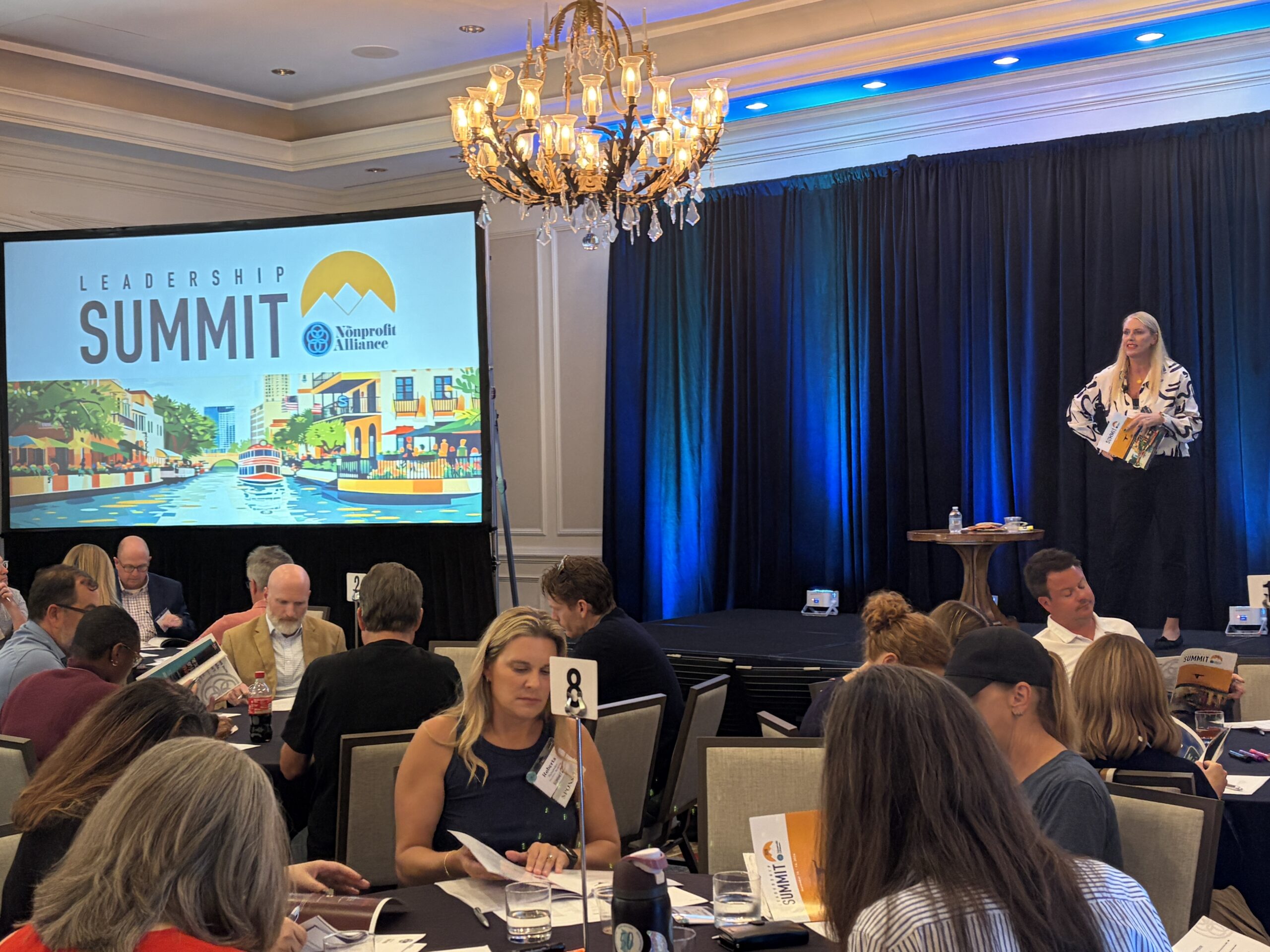
Building Leadership Clarity at TNPA’s Leadership Summit 2026
The team at The Nonprofit Alliance (TNPA) is thrilled to be in San Antonio, Texas, this week with more than 170 senior leaders from across the nonprofit sector. Against the backdrop of the beautiful Riverwalk, TNPA’s Leadership Summit 2026 has brought together a remarkable group of changemakers for an intensive, action-oriented experience designed to strengthen leaders, their teams, and the broader sector.

Lab Notes: The Employee Loyalty Equation
In the nonprofit sector, we sometimes talk about “the mission” as our greatest retention tool. And yes, meaningful work is a differentiator for us as employers. But the data, and our own experience, tells a different story.
In our July Leadership Lab, we looked at the actual math of loyalty, exploring why salary increases – for better or worse – are not the primary retention solution, and identified five drivers that actually determine whether your best people stay or go.
Lab Notes: The Mid-Year Reckoning
We are halfway through 2026. Not almost halfway. Not approaching the midpoint. Halfway. Whatever you said you were going to do in January, you’ve had six months to do it. And in this month’s Essential Leadership Lab cohorts, we stopped moving long enough to look back, so we can move forward with intention.
This is the June installment of Lab Notes, our monthly series turning the high-level discussions of the Essential Leadership Lab into actionable insights for the broader nonprofit community. This month, we moved past the polished updates and assessed the gap between our intentions and our reality.