OMB Is Rewriting the Rules. Nonprofits Need to Weigh In.
On May 29, 2026, the Office of Management and Budget (OMB) proposed sweeping revisions to the rules that govern how federal grant dollars flow to nonprofits, as well as to state and local governments and tribal nations.
The OMB Uniform Guidance is the foundational rulebook for federal grantmaking. It governs everything from how nonprofits recover their overhead costs to how federal agencies structure grant announcements. For the tens of thousands of nonprofits that partner with the federal government to deliver services in communities across the country, these rules are the operating conditions that determine whether those partnerships are viable.
The 2026 proposed changes would give individual federal agencies dramatically expanded discretion over how grants are awarded and administered. The terms and conditions of a federal partnership could vary significantly from agency to agency, and from administration to administration, with little consistency or predictability for grantees.
That discretion could allow an agency to impose requirements that have nothing to do with program performance, emphasizing instead organizational values, policy positions, or political alignment. And the targeting of terms included in grant submissions, such as DEI or gender, is expected to unfairly sideline applications. It could allow funding decisions to be made on ideological grounds rather than community need or congressional intent. That discretion could allow an agency to impose additional certifications, restrict otherwise lawful activities, or evaluate applicants based on policy considerations unrelated to their ability to deliver effective services, emphasizing organizational values or political alignment rather than program performance and community need.
In a recent piece on the federal indictment of the Southern Poverty Law Center, TNPA made the case that treating threats to nonprofit independence as someone else’s problem is a luxury the sector can’t afford. The same logic applies here, where the proposal doesn’t target any single organization or ideology. It restructures the rules for everyone, and the rules being written today will be available to future administrations of both parties.
You may not receive federal grants. Your organization may be entirely privately funded. But the nonprofit sector’s credibility and our ability to serve as trusted partners to communities, to government, and to donors depends on a healthy ecosystem. When federal grantmaking becomes unpredictable or ideologically filtered, it doesn’t just harm the organizations directly affected. It erodes public trust in the sector as a whole.
For the organizations that do depend on federal funding to deliver services, organizations serving millions of people every day, the stakes are immediate and concrete. From expected grant decision delays to broader uncertainty in an already-stretched funding environment, these new rules will have a direct impact. Consider a community health center that receives a federal grant but also relies on foundation support and charitable donations. Faced with broad or ambiguous grant conditions, it may decide to cancel a privately funded voter registration drive, discontinue a partnership with a local coalition, or decline to pilot an innovative community outreach effort, not because the activity is prohibited, but because the risk of misunderstanding or losing federal funding feels too great. That kind of uncertainty creates a chilling effect, discouraging lawful and beneficial activities that strengthen communities and advance nonprofit missions.
Call to Action
The comment period is open through July 13. This is a formal regulatory process. Every TNPA member — and every nonprofit leader, grant recipient, foundation, and sector partner — should review the proposal and submit comments. Agencies are required to consider substantive public comments, and a robust record from the nonprofit community is essential to preserving a fair, transparent, and predictable grantmaking system.
Sign-on to this NCN coalition letter by July 13.
You don’t have to be a federal grantee to have a stake in this. You simply have to care about a nonprofit sector that can operate independently, serve communities effectively, and weather political change without losing its footing.
The rules that govern federal grantmaking shape the conditions under which the entire sector operates. Now is the time to show up.
Shannon McCracken is President & CEO of The Nonprofit Alliance (TNPA), a national nonprofit infrastructure organization whose mission is to promote, protect, and strengthen the nonprofit sector. TNPA is committed to creating safe spaces for all voices in the nonprofit sector to be heard.

Author: Shannon McCracken
Shannon McCracken is the founding President and CEO at The Nonprofit Alliance.
Related Posts
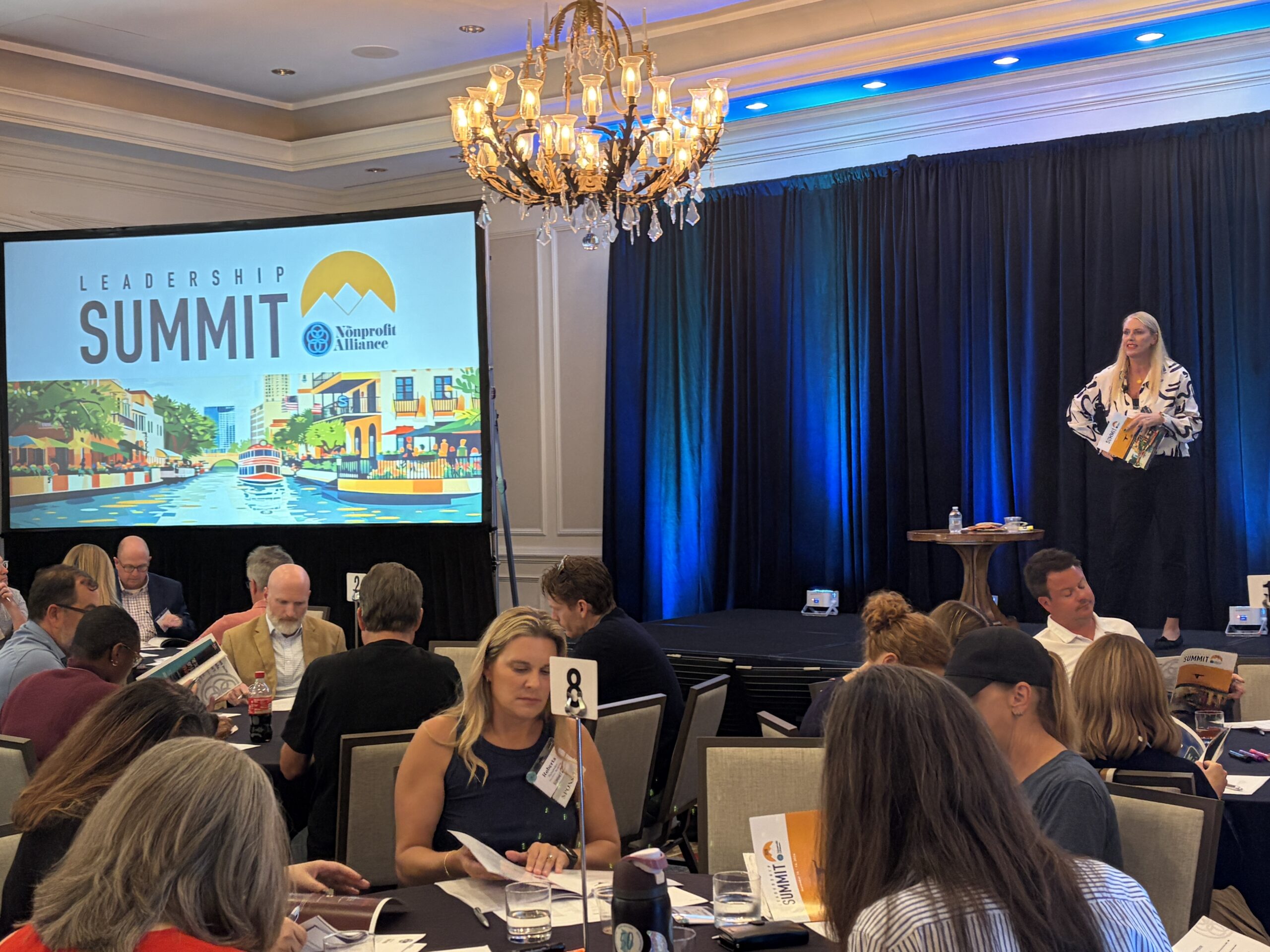
Building Leadership Clarity at TNPA’s Leadership Summit 2026
The team at The Nonprofit Alliance (TNPA) is thrilled to be in San Antonio, Texas, this week with more than 170 senior leaders from across the nonprofit sector. Against the backdrop of the beautiful Riverwalk, TNPA’s Leadership Summit 2026 has brought together a remarkable group of changemakers for an intensive, action-oriented experience designed to strengthen leaders, their teams, and the broader sector.

Leading EDGE Updates | August 2026
Check out our latest TNPA blog post for quarterly updates, including ways to get involved with our community of nonprofits, nonprofit-supporting companies, schools, and students who are passionate about making a difference through the social good sector!
Artificial Intelligence (AI) Policy Update
TNPA continues to work with policymakers regarding ethical AI priorities and we are closely tracking the implementation of the President’s AI plans.
We are also engaging our membership on educational opportunities as they navigate this fluid landscape, speaking with our nonprofit and commercial members regarding policy priorities which include…