Lab Notes: The Emotional Toll of Leadership: Leading When You’re Overwhelmed
March 2026 Essential Leadership Lab Cohort
Leadership in the nonprofit sector has always demanded resilience, but the current landscape, marked by economic uncertainty, increased demand for services, and the pressure to do more with less, has pushed many leaders to what at times feels like a breaking point. In our March Leadership Lab, we tackled a topic that doesn’t get discussed enough in leadership circles: the emotional toll of this work and what it costs us to keep showing up when we’re running on empty.
We began by acknowledging four critical intersections of leadership and stress that affect nonprofit leaders daily:
Decision Fatigue: Research in cognitive psychology shows that our brains have limited capacity for decision-making. Every decision, even minor choices throughout the day depletes our mental resources. As leaders making dozens or hundreds of decisions daily, it’s no wonder many feel completely spent by mid-afternoon, even when they “didn’t do anything.”
Chronic Stress Response: When we operate in constant high-stress mode, our bodies don’t distinguish between mission-critical deadlines and actual physical threats. The same stress hormones flood our system, and over time, this chronic activation affects our decision-making, emotional regulation, and physical health.
Empathy Fatigue: When you’re constantly holding space for others’ challenges and emotions, your capacity to do so becomes depleted. This isn’t a character flaw; it’s a biological reality.
The Paradox of Control: Leaders often feel simultaneously over-responsible for outcomes while being under-resourced to achieve them. This gap creates a particular kind of stress that’s distinct from other workplace pressures.
Three Frameworks for Sustainable Leadership
Rather than offering generic “self-care” advice, we explored three diagnostic and strategic frameworks.
Framework #1: The Capacity Inventory
We introduced the concept that leaders have five different “fuel tanks” of capacity:
●Cognitive Capacity: Strategic thinking, problem-solving, complex decision-making
●Emotional Capacity: Empathy, holding space for others, managing your own emotions
●Physical Capacity: Stamina, energy, health, ability to sustain intense pace
●Relational Capacity: Building connections, collaboration, being present with others
●Creative Capacity: Innovation, vision, possibility thinking, seeing new solutions
The key insight: You might have plenty of gas in one tank while running on fumes in another. When participants assessed their own capacity levels, the “low fuel” signals were distributed across all five areas, confirming that overwhelm isn’t monolithic and requires targeted restoration.
Framework #2: The “Hell Yeah or No” Decision Filter
Based on Derek Sivers’ concept, this framework helps leaders protect their limited capacity by being more ruthless about commitments. Before saying yes to any commitment, request, or opportunity, leaders should ask three questions:
1. Mission Alignment: Does this directly advance our core mission?
2. Unique Positioning: Am I uniquely positioned to do this, or could someone else do it equally well (or better)?
3. Actual Capacity: Do I have the actual capacity to do this well without sacrificing something more important?
If all three aren’t a clear yes, the answer should be no (or “not now”). Saying no isn’t about the worthiness of an opportunity; it’s about the best use of limited leadership capacity right now.
Framework #3: The Energy Audit + Stop-Start-Continue
This framework helps leaders see patterns in what drains versus restores their energy. Participants mapped activities from the past two weeks, plotting energy-giving and energy-draining activities and identifying changes that help keep the two in balance. Participants shared commitments including reducing negative conversations, continuing physical activities like running, blocking calendar time for strategic thinking, and stepping away from screens to enhance focus.
One participant shared a new organizational meeting structure, demonstrating how energy management can be systematized at the organizational level.
Moving Forward
The session reinforced a critical truth: Choosing sustainability is the most strategic decision a leader can make. It requires intention, conviction, accountability, and practice.
Organizations cannot thrive when their leaders are running on empty. Protecting your leadership capacity isn’t selfish; it’s essential.
Leaders know this. It’s the advice we give to other people. Sometimes we simply need it mirrored back to us, along with practical tools to put it into practice.
About The Essential Leadership Lab
The Essential Leadership Lab is a cohort-based program for nonprofit leaders, providing practical frameworks and peer learning opportunities to address the real challenges facing the sector. Each month, we tackle topics that matter most to leaders navigating complexity and change.
Interested in joining a future Lab cohort? Contact us to learn more about upcoming sessions.
Lab Notes is a monthly series that turns the high-level discussions of TNPA’s Essential Leadership Lab into actionable insights for the nonprofit sector.

Author: Shannon McCracken
Shannon McCracken is the founding President and CEO at The Nonprofit Alliance.
Related Posts
Building Leadership Clarity at TNPA’s Leadership Summit 2026
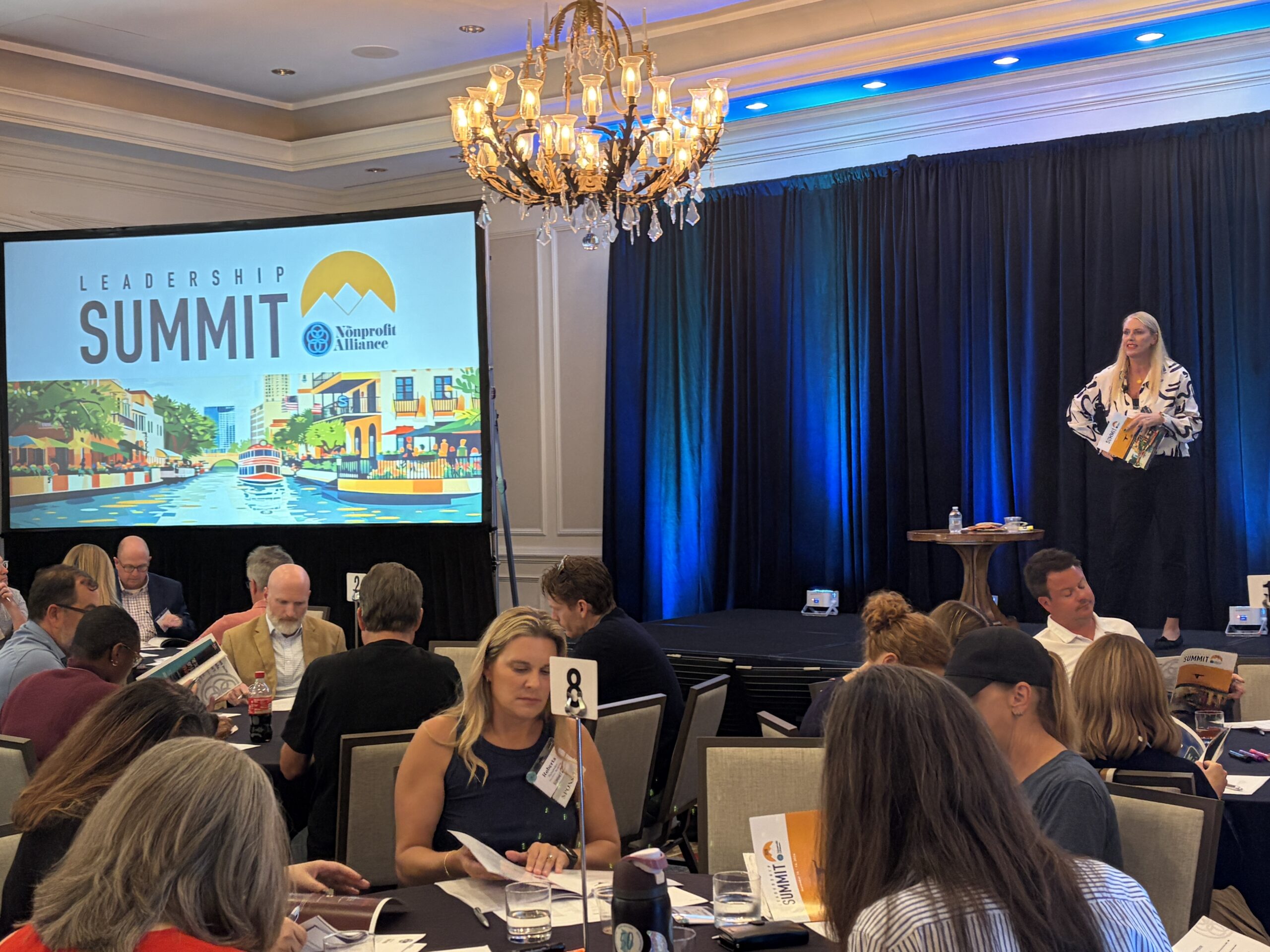
The team at The Nonprofit Alliance (TNPA) is thrilled to be in San Antonio, Texas, this week with more than 170 senior leaders from across the nonprofit sector. Against the backdrop of the beautiful Riverwalk, TNPA’s Leadership Summit 2026 has brought together a remarkable group of changemakers for an intensive, action-oriented experience designed to strengthen leaders, their teams, and the broader sector.
Leading EDGE Updates | August 2026
Check out our latest TNPA blog post for quarterly updates, including ways to get involved with our community of nonprofits, nonprofit-supporting companies, schools, and students who are passionate about making a difference through the social good sector!
Artificial Intelligence (AI) Policy Update
TNPA continues to work with policymakers regarding ethical AI priorities and we are closely tracking the implementation of the President’s AI plans.
We are also engaging our membership on educational opportunities as they navigate this fluid landscape, speaking with our nonprofit and commercial members regarding policy priorities which include…