
Artificial Intelligence (AI) Policy Update
August 2026
TNPA continues to work with policymakers regarding ethical AI priorities and we are closely tracking the implementation of the President’s AI plans.
We are also engaging our membership on educational opportunities as they navigate this fluid landscape, speaking with our nonprofit and commercial members regarding policy priorities which include:
- Compliance considerations;
- Cybersecurity, privacy, and risk exposure, particularly liability risk for smaller organizations; and
- Analysis of how individual fundraising and communication tools are influenced by AI.
Much of the initial investment in AI in the nonprofit sector was focused on fundraising, but we are seeing more expansion in AI for all organizational departments, including programs, advocacy, and communications. The threads of AI are much broader now, not only because of the policy focus but also the growing awareness and interest by staff, donors, and other stakeholders.
As the nonprofit sector remains among the highest rated sectors for public trust, maintaining that trust with donors and beneficiaries remains at the forefront of all conversations.
State and Federal AI Legislation
State legislation introduced over the past year or state bills that have recently passed targeted the regulation of the use of AI in hiring practices, demanded public transparency in AI tools, and specified financial fines for a lack of compliance. But state legislation introduced over the past six months have included much more specificity, notably around prohibiting the use of dynamic pricing based on personal data or surveillance data, requiring AI companies to take reasonable steps to prevent harmful or manipulative interactions with children, and clearly disclosing that users are interacting with AI.
On Capitol Hill, general themes from hearing statements, press releases, proposed legislation, and general rhetoric include public trust concerns, specifically regarding misleading messaging; differing opinions on AI accountability and oversight; job impacts in certain sectors; negative data center impacts on local communities; and child protection and chatbox usage.
Recently, broader AI legislative frameworks have been introduced, notably a bipartisan federal policy AI framework from Representative Trahan (D, MA-03). Senator Warner (D, VA) also introduced his own AI framework, which focuses on innovation and national security.
As policy is moving forward, it is clear that our sector needs to have a seat at the table. TNPA is actively engaging to ensure our ethical AI priorities are heard, highlighting both the opportunities and challenges.
The Latest from the Administration
The June 2 Executive Order on AI, Promoting Advanced Artificial Intelligence Innovation and Security, continues the White House’s AI policy priorities laid out in its March National AI Legislative Plan, which focused on AI job creation and pressed for limiting AI oversight. While the June EO continues earlier areas of policy directives and Executive Order focus on the support of innovation, there were a few notable inclusions, specifically around the expectation of previews by AI companies of new AI technology or initiatives with the White House.
In August, the White House held a meeting with leading AI companies. No concrete details have been released, but rumors abound, including that only “closed” AI models will be part of the voluntary previews of technology. The White House has not released the new policy yet; see more details here. The administration also is planning a $5 billion investment from federal agencies for use of AI for research.
Data Centers and the Political Lens
The issue around the building of data centers has become a heated one in this midterm election year. From Texas to Pennsylvania, leaders of both parties are voicing their concerns about the impacts of data centers in their communities, naming water usage, noise pollution, and environmental harm. News coverage is amplifying the data confirming the strong opposition to data centers from constituents in many parts of the United States.
TNPA has framed AI as a “shiny light” issue in 2026, given the focus by the administration and members of Congress and the rapid nature of AI innovation and usage. But the understandable data center backlash has the potential to overtake the policy discussion around ethical AI approaches, what oversight can and should look like, and how that policy will impact communities and businesses.

Author: Ann Hollingsworth
Ann Hollingsworth is the VP, Government Affairs for The Nonprofit Alliance.
Related Posts
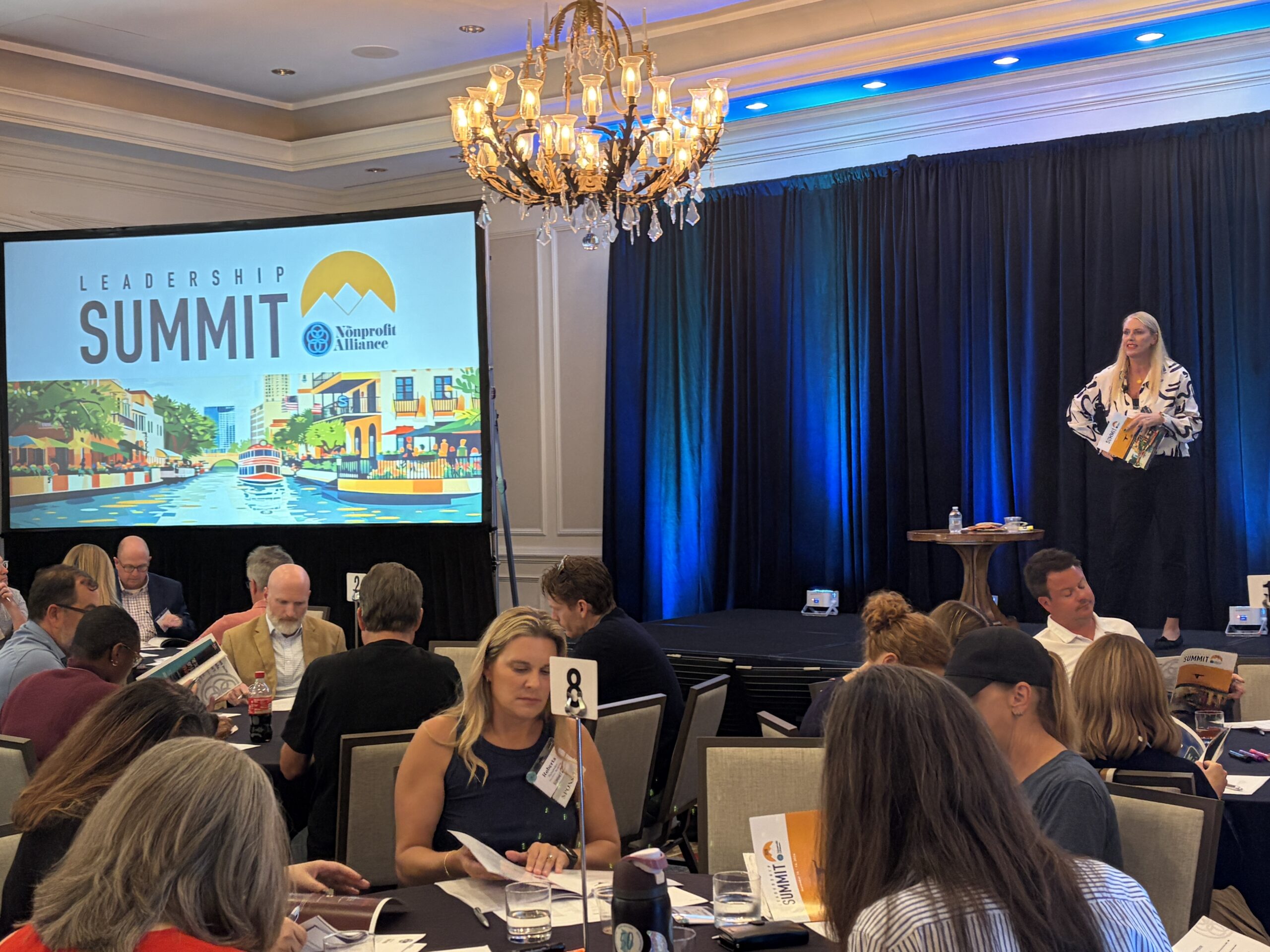
Building Leadership Clarity at TNPA’s Leadership Summit 2026
The team at The Nonprofit Alliance (TNPA) is thrilled to be in San Antonio, Texas, this week with more than 170 senior leaders from across the nonprofit sector. Against the backdrop of the beautiful Riverwalk, TNPA’s Leadership Summit 2026 has brought together a remarkable group of changemakers for an intensive, action-oriented experience designed to strengthen leaders, their teams, and the broader sector.
Leading EDGE Updates | August 2026
Check out our latest TNPA blog post for quarterly updates, including ways to get involved with our community of nonprofits, nonprofit-supporting companies, schools, and students who are passionate about making a difference through the social good sector!

Lab Notes: The Shifting Fundraising Landscape
Our August Leadership Lab invited discussion of today’s fundraising landscape, and pretty quickly all four cohorts diagnosed a period of intense economic and operational pressure and a K-shaped revenue landscape: while high-wealth giving through sophisticated third-party vehicles is surging, we are seeing a continued and concerning decline in everyday, lower-dollar givers.